
Wednesday, May 14, 2014
NEW BLOG LOCATION
pure_sophist_monster is moving to a new location. I have moved my professional site and now the blog is there. Check it out!

Monday, April 14, 2014
Love Your Monsters: A Worser Apocalypse (A Discussion of Spike Jonze's Her)

My English in the World talk at Saint Louis University addressing the intersections of technology, science fiction, and monsters.
A key question in science fiction specifically and, I think, in our culture at large, concerns the human relationship with the nonhuman. We are concerned about the shapes of these relationships as well as the possibilities of these relationships as such. Buried within these concerns is a more general anxiety about the very boundaries between the human and the nonhuman. Such concerns manifest an ongoing anxiety about the place of the human in the world. Monsters of all shapes and sizes are thus symbols and stand ins for this general anxiety. The human/not-quite-human intersection that forever threatens the very limits of what makes a human a human.
Wednesday, March 5, 2014
FALL 2014: Public Rhetoric: Write the World

We build our world around the things we love—food, films, books, beer, motors, music—and the people with whom we share them. And we build these worlds by sharing the things we love through all means of communication: we take pictures of our food, write reviews of books online, and endlessly debate our favorite songs in dorm rooms and at bars. And in this course, that is exactly what you will do: write about the stuff you love. But there is catch, of course. You must write about the things you love in ways that will help others to love them as well—no mere diary entries or talk among aficionados, you must produce public texts for unfamiliar audiences who might not yet share your love of cheese, craft beer, Carmen Sandiego, or Death Cab for Cutie. To engage such audiences, you’ll need to write persuasively and in media that grab that audience’s attention. Some students might produce podcasts, some might maintain a blog, and still others might film a series of video shorts. The goal of this course is for you to write in public so that your loves might become someone else’s loves—so that your world can be shared with others. Students in the course will produce a series of texts (loosely defined) devoted to a thing they love. The texts will be composed for a particular public and will be released on a regular basis (think in terms of a podcast episodes, magazine issues, or a television series). Students have complete creative control over their productions in terms of medium, style, and content. The only requirement is that these texts be public and for an audience that needs to be persuaded.
Monday, February 10, 2014
Re-Post: Curling TIme
In honor of the start of curling at the 2014 Winter Olympics in Sochi Russia, I dug into the archives for this gem from four years ago:
 To explain why, over the last couple of Games, curling seems to attract some attention I would argue that it is because it is very much unlike the other Olympic sports, which are, we must admit, largely like each other. A majority of the sports from skiing to bobsled to speed skating are go-fast-and-be-timed-on-a-sheet-of-the-cold-stuff sports. Don't get me wrong, I enjoy the Super G as much as the next casual viewer, but after awhile even I get bored watching the clock. This is not say that doing the sport is boring or that skiing isn't in many many important ways not the same as bobsled (or that I am always "bored" watching them). Again, I am talking about spectators.
 Curling, in large part (there is a clock even here), takes place out of time, or, better said, in a different sort of time. There is no rush. A lot of it is, to be honest, four men or women standing around staring at and talking about a rock. And this is precisely what makes it interesting. Some have explained that fans like curling because it looks like something we could do. While there is merit to this argument, it seems far more likely that we like a lot of Olympic sports, particularly the go-fast-and-be-timed-on-a-sheet-of-the-cold-stuff sports, because they look precisely like things we would never ever do unless we were dared or otherwise tricked. The Winter Olympics, which have been very popular this time around, have a much higher percentage of utterly "insane" sports relative the Summer Games. So I don't see curling as the Everyman sport because we like the rest that surely are not for us.
Curling is attractive because it offers a rhythm different from the rest of the Games. We get to see the athletes' think about what they are doing because their thinking happens out loud and in public. For the opposite reason, however, I like things like speeding skating and skeleton because you watch the athletes' think through their bodies. For the casual viewer, as well, curling does not require constant engagement. I can miss a rock or an end (I may miss something cool, but I am not out of it completely). This level of commitment makes curling the Olympic sport designed for the long haul. I feel engaged in the games, interested in the spirit of competition, and the engagement, because of comprehensive television coverage, is nearly constant. It is the sport I know and love between and behind the sports that excite me through terror and time. In this way, the go-fast-and-be-timed-on-a-sheet-of-the-cold-stuff sports are not boring (or do not become boring) precisely because I have curling to watch in between them.
Curling, the sport that should be the "boring" one, serves the important function of keeping all the other sports from becoming so. Curling is evidence that "excitement," like "boredom," is relative, and that all kinds of things have value if only we find a way to experience them as valuable.
 To explain why, over the last couple of Games, curling seems to attract some attention I would argue that it is because it is very much unlike the other Olympic sports, which are, we must admit, largely like each other. A majority of the sports from skiing to bobsled to speed skating are go-fast-and-be-timed-on-a-sheet-of-the-cold-stuff sports. Don't get me wrong, I enjoy the Super G as much as the next casual viewer, but after awhile even I get bored watching the clock. This is not say that doing the sport is boring or that skiing isn't in many many important ways not the same as bobsled (or that I am always "bored" watching them). Again, I am talking about spectators.
 Curling, in large part (there is a clock even here), takes place out of time, or, better said, in a different sort of time. There is no rush. A lot of it is, to be honest, four men or women standing around staring at and talking about a rock. And this is precisely what makes it interesting. Some have explained that fans like curling because it looks like something we could do. While there is merit to this argument, it seems far more likely that we like a lot of Olympic sports, particularly the go-fast-and-be-timed-on-a-sheet-of-the-cold-stuff sports, because they look precisely like things we would never ever do unless we were dared or otherwise tricked. The Winter Olympics, which have been very popular this time around, have a much higher percentage of utterly "insane" sports relative the Summer Games. So I don't see curling as the Everyman sport because we like the rest that surely are not for us.
Curling is attractive because it offers a rhythm different from the rest of the Games. We get to see the athletes' think about what they are doing because their thinking happens out loud and in public. For the opposite reason, however, I like things like speeding skating and skeleton because you watch the athletes' think through their bodies. For the casual viewer, as well, curling does not require constant engagement. I can miss a rock or an end (I may miss something cool, but I am not out of it completely). This level of commitment makes curling the Olympic sport designed for the long haul. I feel engaged in the games, interested in the spirit of competition, and the engagement, because of comprehensive television coverage, is nearly constant. It is the sport I know and love between and behind the sports that excite me through terror and time. In this way, the go-fast-and-be-timed-on-a-sheet-of-the-cold-stuff sports are not boring (or do not become boring) precisely because I have curling to watch in between them.
Curling, the sport that should be the "boring" one, serves the important function of keeping all the other sports from becoming so. Curling is evidence that "excitement," like "boredom," is relative, and that all kinds of things have value if only we find a way to experience them as valuable.
Sunday, December 1, 2013
Kids These Days
I'm starting a little side project today, and I'd love for you all to contribute. The Tumblr site will collect content that challenges both nostalgia for a past the never was and anxiety about a present that isn’t. Please submit pictures/quotes/videos that capture the ways life is and has always been mediated.

Friday, November 15, 2013
Critique Grinder

Tuesday, November 12, 2013
On Having Been Had
I recently contributed a "Big Ideas" video over at Itineration. Here it is if you want to give it a watch. Skip it if you like.
In brief, I attempted to articulate what is sometimes called the post-critical moment. For me, the way into this moment (or movement) is the work Bruno Latour, in particular his widely read and debated "Why Has Critique Run Out of Steam." In short, post-criticism, if we can or should call it that, is interested in modes of intellectual engagement other than a kind of ideological unmasking, where every act or action or thing is simply the manifestation of some deeper, realer underlying cause (e.g., ideology, neoliberalism). Here is Latour on the danger of this critical project to which post-criticism responds:
In which case the danger would no longer be coming from an excessive confidence in ideological arguments posturing as matters of fact—as we have learned to combat so efficiently in the past—but from an excessive distrust of good matters of fact disguised as bad ideological biases! (227)Now, there is lots to unpack there, but hopefully it suffices for now.
At one point in the above video, during a litany of synonyms for the critical project (or the project of critical thinking), I mentioned the time I once heard a colleague describe critical thinking as "how not to be a sucker." This, for me, has never sat easy: it has always been the kind of attitude that makes critical thinking troubling. It is not that I am interesting in seeing people mislead or duped; it's that as someone in rhetoric I am much more invested in the operation, the work, of assent. And so I am necessarily interested in engagement, exposure, and vulnerability. Trying not to be a sucker is a terrible way to live.
Okay, back to why I am here. I have been slowly making my way through Latour's most recent work, An Inquiry into Modes of Existence (AIME for short). It is a tome that moves quickly and slowly in several directions at once. He has so far written quite a bit on BEING-AS-OTHER.
To obtain being, otherness is required. Sameness is purchased, as it were, at the price of ALTERITY. (110)He later asks if there is
A single moment when we don't benefit from the formidable energy of what seems to transit in us? (192)While the itinerary of this transit moves through "the flux of fears and terrors" (192),
it goes toward what allows it to be, to come, and to reproduce. (193)This is a state, for Latour,
designated by a happy conjunction of the verbs "to be" and "to have": "We've been 'had'"—that's it: "We've been possessed; carried away; taken over; inhabited." (193)To be is also to be had. And this, of course, is its own happy conjunction for me as the idiom "to be had" is rather synonymous with the designation of "sucker": one who is easily had.
Again, I am not opposed to the skepticism, doing your homework, or any other work associated with avoiding the primrose path. No one wants to be taken for a ride. Except, of course, that our lives are lived with, through, and because of others; we are because others have us. Making a chief intellectual virtue out of avoiding being a sucker too quickly forecloses on the value of seeking out different, unique ways of being had. There are worse things to be than a sucker; not being at all is one of them.
Monday, June 10, 2013
Wednesday, May 1, 2013
New Project: Speculative Usability
Lars Söderlund and I have been working on what we are currently calling speculative usability. Combining Bruno Latour's work on ANT and his Heideggerian reading of the thing and work in speculative realism (e.g., Ian Bogost), we want to carve out a space in usability testing for more inventive, less normative approaches. That is, we want to treat usability as a thing that is always at stake in usability testing.
Abstract:
Speculative Usability calls us to attend more rigorously to the individual existences of objects, and as such it allows us to ask usability questions less exclusively wedded to the user than those posed in most usability tests. Rather than “Is the user able to quickly work this object as the designer intended?” or “Does the composition of this object satisfy the user?” we can ask, “How does this object work given its own particular set of relations?” and “How, then, might this object work otherwise?” This involves not only decentering the user as our focus, but also opening ourselves to non-normative evaluations of objects. Our goal is no longer to measure the distance between an object’s use and acceptable levels of efficiency, but to notice an object as it interacts with other objects (including the user).
Saturday, April 27, 2013
A Saturday Morning Juxtaposition: Bruno Latour and Phillip K. Dick

Phillip K. Dick, Ubik
Back in the kitchen he fished in his various pockets for a dime, and, with it, started up the coffeepot. Sniffing the - to him - very unusual smell, he again consulted his watch, saw that fifteen minutes had passed; he therefore vigorously strode to the apt door, turned the knob and pulled on the release bolt.
The door refused to open. It said, “Five cents, please.”
He searched his pockets. No more coins; nothing. “I’ll pay you tomorrow,” he told the door. Again he tried the knob. Again it remained locked tight. “What I pay you,” he informed it, “is in the nature of a gratuity; I don’t have to pay you.”
“I think otherwise,” the door said. “Look in the purchase contract you signed when you bought this conapt.”
In his desk drawer he found the contract; since signing it he had found it necessary to refer to the document many times. Sure enough; payment to his door for opening and shutting constituted a mandatory fee. Not a tip.
“You discover I’m right,” the door said. It sounded smug.
From the drawer beside the sink Joe Chip got a stainless steel knife; with it he began systematically to unscrew the bolt assembly of his apt’s money-gulping door.
“I’ll sue you,” the door said as the first screw fell out.
Joe Chip said, “I’ve never been sued by a door. But I guess I can live through it.”

Bruno Latour (Jim Johnson), "Mixing Humans and Nonhumans Together: The Sociology of a Door-Closer"
On a freezing day in February, posted on the door of the Sociology Department at Walla Walla University, Washington, could be seen a small hand-written notice: "The door-closer is on strike, for God's sake, keep the door closed." This fusion of labor relations, religion, advertisement, semiotics, and technique in one single insignificant fact is exactly the sort of thing I want to help describe.
Friday, April 19, 2013
Tuesday, April 16, 2013
Melting
 I am awake. It's about 4:00a.m. The rain and wind have me worried about the roof again. There are a few water stains on my office ceiling and sometimes a trickle down the inside of a window. My son's room has another spot. I think the flashing around the chimney may need some work. I am anxious, and I am awake. And behind the worry about the roof, come all the others. This is pretty normal. The anxiety a routine.
Will is awake. It's a little after 4:30a.m. He has a cold and a bad cough. It wakes him up, and so he makes his way over to our room. He is remarkably chipper, and he politely requests cough medicine. My wife obliges. I use his interruption and the light from the bathroom to check the ceilings. No new stains in either room. No trickle down the inside of the window.
Cough medicine distributed. Potty breaks all around. Will scampers to our bed toward the promise of a snuggle. We are all awake. Will talks for a spell about something I cannot remember. I am already trying to doze off. He falls silent and begins gently rubbing my cheeks. He combs the hair away from my forehead. These gestures we have performed a thousand times. And then he grabs my nose, just as gently. This, I think, is pure joy. I am melting.
And then he falls asleep, and so do I.
Monday, March 18, 2013
ATTW 2013
Here is my 2013 Association of Teachers of Technical Writing Conference presentation. It ends abruptly as I moved to discuss student samples. These can be found at newmediasciencewriting.blogspot.com. The slides, with partial script and notes, are embedded below. Enjoy!
Tuesday, October 30, 2012
How Strange To Be Anything At All
Sometimes alone in your head is a frightening place to be. This is particularly true when things go bad, and they have been going bad for us lately. As some of you may know, my wife is now 22 weeks pregnant. On September 21, the day we were supposed to find out the gender of our baby, we were informed that there were several abnormalities: the brain was not fully divided and the heart and kidneys weren't functioning properly. Even without a firm diagnosis as to why, we were told that our baby, a girl, had about a 1% chance of surviving to full term. We were devastated: what was to be a celebration became an unreal nightmare. We decided soon after to keep our baby as long as possible. Annie was our daughter, and we were past the point where we could imagine otherwise (my wife Jodi has written eloquently on our decision not to terminate the pregnancy).
We soon after learned that our baby had Trisomy 13 (an extra 13th chromosome), and that the abnormalities were critical and incompatible with life. (I will say here that the folks at Cardinal Glennon Children's Hospital Fetal Care Institute are amazing.) At most, Annie might make it to full term and perhaps live a day or two. Most likely, she will pass in utero. We began to prepare ourselves for these eventualities, describing ourselves as actively-passive. We would work to accept what we could not control, and to live with what we had for as long as we had it. So Annie became Annie. We feel her kick. We read to her. Will (Annie's big brother) talks to her and rubs Jodi's belly (and worries about being sick himself and of not wanting to "go to heaven").
 Some days are harder than others, but most days are full of the joy that is Annie's life. It takes a lot of work to carve out this kind of happiness, but it has been worth it.
It's been worth it because the universe wasn't quite done. Annie's form of Trisomy 13 (Down Syndrome is Trisomy 21) was a full translocation (which only happens in about 20% of trisomy 13 cases), which is when the extra 13th chromosome attaches to the 14th. In about 25% of these cases, this translocation is inherited. We had genetic testing done. Yesterday, we learned that my wife is a carrier. She was devastated. We were devastated. What does this mean? Can we have more children? Do we want to risk going through this again? We haven't really thought through any of this yet. We just resolved to look at our healthy and wonderfully amazing son and feel lucky as hell. Just look at him: pretty fucking amazing, right?
 So, I'm in my head a lot these days. After all, as an academic I'm pretty much paid to think all day, which is not exactly a choice profession with all this on your mind. And so to get some work done, I have to start thinking about Annie in terms of my research: object-oriented rhetoric, new materialism, vibrant matter, where the lesson is over and over again the complexity of the world and the fact that everything has a kind of force. And you start to feel vulnerable. Even our genes are out to get us.
But that's rather pessimistic and counter to the actively-passive stance we had taken. Vulnerability brought us Will. Vulnerability brought my wife and I together. We are each us of affect-able, persuadable, moveable, and changeable. Because we are these things we get to be something at all in the first place. Most days I get to feel Annie kick. I have seen pictures of her: her rainbow spine and the hands that will never open all the way. And these kicks are more than signs, more than symbolic representations of life; they are her being alive. And these kicks aren't even her fighting the good fight: they are simply Annie living as Annie.
She isn't battling: we aren't battling. We are all of us vulnerable and alive because of it. All we are ever doing is being alive. I have a daughter that I will only live with for nine months, and most of that, all of it most likely, will be in utero. I celebrate that. I honor that. I grieve for that. This isn't a simple celebration or a treatise on the value of human life. This post isn't pro- anything. It is an active recognition of our permanent (and sublimely passive) vulnerability—not to a higher power, our own power, or some other life force, but a complicated jumble of other things, each as vulnerable as the next.
Vulnerability is the chance to be anything at all and often times for only a moment. We can only ever be actively passive in the face of this, in the face of others, in the face of a world we are thrown into, kicking and screaming.
We soon after learned that our baby had Trisomy 13 (an extra 13th chromosome), and that the abnormalities were critical and incompatible with life. (I will say here that the folks at Cardinal Glennon Children's Hospital Fetal Care Institute are amazing.) At most, Annie might make it to full term and perhaps live a day or two. Most likely, she will pass in utero. We began to prepare ourselves for these eventualities, describing ourselves as actively-passive. We would work to accept what we could not control, and to live with what we had for as long as we had it. So Annie became Annie. We feel her kick. We read to her. Will (Annie's big brother) talks to her and rubs Jodi's belly (and worries about being sick himself and of not wanting to "go to heaven").
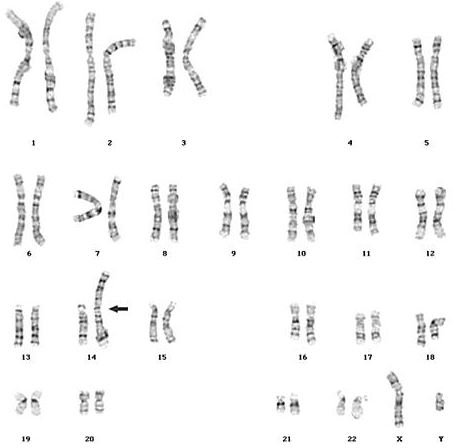
It's been worth it because the universe wasn't quite done. Annie's form of Trisomy 13 (Down Syndrome is Trisomy 21) was a full translocation (which only happens in about 20% of trisomy 13 cases), which is when the extra 13th chromosome attaches to the 14th. In about 25% of these cases, this translocation is inherited. We had genetic testing done. Yesterday, we learned that my wife is a carrier. She was devastated. We were devastated. What does this mean? Can we have more children? Do we want to risk going through this again? We haven't really thought through any of this yet. We just resolved to look at our healthy and wonderfully amazing son and feel lucky as hell. Just look at him: pretty fucking amazing, right?

But that's rather pessimistic and counter to the actively-passive stance we had taken. Vulnerability brought us Will. Vulnerability brought my wife and I together. We are each us of affect-able, persuadable, moveable, and changeable. Because we are these things we get to be something at all in the first place. Most days I get to feel Annie kick. I have seen pictures of her: her rainbow spine and the hands that will never open all the way. And these kicks are more than signs, more than symbolic representations of life; they are her being alive. And these kicks aren't even her fighting the good fight: they are simply Annie living as Annie.
She isn't battling: we aren't battling. We are all of us vulnerable and alive because of it. All we are ever doing is being alive. I have a daughter that I will only live with for nine months, and most of that, all of it most likely, will be in utero. I celebrate that. I honor that. I grieve for that. This isn't a simple celebration or a treatise on the value of human life. This post isn't pro- anything. It is an active recognition of our permanent (and sublimely passive) vulnerability—not to a higher power, our own power, or some other life force, but a complicated jumble of other things, each as vulnerable as the next.
Vulnerability is the chance to be anything at all and often times for only a moment. We can only ever be actively passive in the face of this, in the face of others, in the face of a world we are thrown into, kicking and screaming.
Wednesday, October 24, 2012
Science Writing as Articulation
A short video outlining the theory informing ENGL 401: New Media Science Writing (Fall 2012 at St. Louis University). The short video is part of a larger, collaborative, and multimedia research project currently underway at SLU.
Science Writing as Articulation from Nathaniel Rivers on Vimeo.
Teaching with New Media Technology
I was asked to give a talk on teaching with new media technology. I was unable to attend in the flesh, so I recorded my talk (taking advantage of the ability to sync quotes and seamlessly integrate examples):
Teaching with New Media Technology from Nathaniel Rivers on Vimeo.
Tuesday, July 31, 2012
KB Journal Video Parlor #1: An Introduction
KBJournal Editors Paul Lynch and Nathaniel Rivers discuss their vision
for the journal as well as new features they plan on introducing this
Fall. Please visit the KBJournal for more.
Monday, July 16, 2012
Rhetorical Theory/Bruno Latour Video Series
So, I have not posted in quite some time. I have, however, been busy. I have been making additional episodes of Rhetorical Theory/Bruno Latour. These episodes are now appearing as a series at Enculturation: A Journal of Rhetoric, Writing, and Culture. In addition to the introduction and the three numbered episodes previously posted here on my blog, there are now five more episodes up at Enculturation, with more episodes coming soon. My thanks to Casey Boyle for pulling this together.


Tuesday, June 12, 2012
Rhetorical Theory/Bruno Latour Episode #3: The Strong Defense
With this episode, I continue with my provocations, attempting to assemble rhetorical theory and Bruno Latour in mutually beneficial ways. In this episode, I discuss what Bruno Latour adds to Richard Lanham's Strong Defense of rhetoric. I conclude that in addition to offering a strong defense of rhetoric, Latour offers an equally strange one as well.
Subscribe to:
Posts (Atom)